


Who Lives Underneath the Centre: The Story of Mysterious Beings We Call Zombies
August 05, 2026
By:
Mateja Dolnicar
Children: Sophie, Matilda, Alice, Cleo, Freya, Hannah, Astrid, Kian, Emerson, Ellie, Zoe, Kaedra, Goldie, Ferdinand, Arietta, Leonard, Mina, Logan, Maren, Kai, Morris, Magnus, Esmae, Emma*, River*
Educators: Jennifer, Kim, Hoa, Rizwana, Alex, Suzy
The following conversations narrate a partial story of emerging relations with beings that children call zombies, sustained over many months. As a pedagogist, I am committed to fostering early childhood spaces where ideas, uncertainties, and multiple perspectives can be collectively held and worked with over time, including those that might otherwise be overlooked or too quickly dismissed. In this inquiry, children, educators, and I created space for children’s ideas about the beings they call zombies to be shared, negotiated, and revisited together over time.
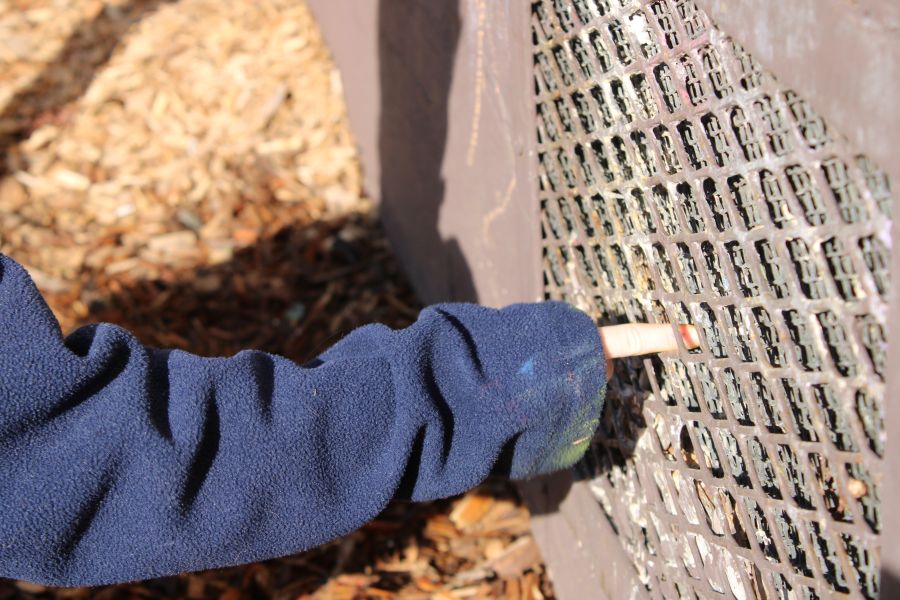
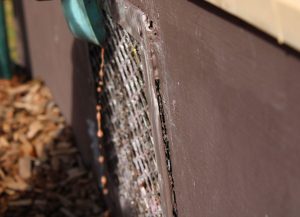
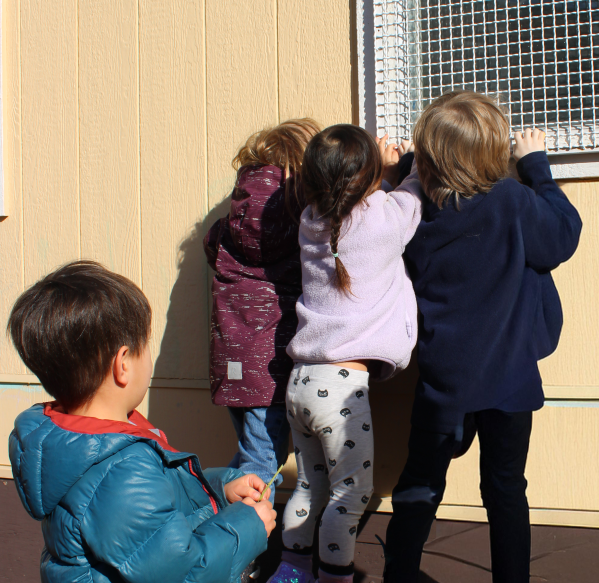
This inquiry took place in a 3–5 classroom in Metro Vancouver within Britannia Community Services Centre Childcare, located in an older, raised building with a crawl space beneath it. Over time, some of the children became convinced that something or someone lives underneath the daycare, referring to these mysterious beings as zombies. Gathering around the metal grate on the side of the building, children press their faces against the openings, call into the darkness, warn one another not to dig too deep, and wonder about who might be living below. They speculate about what zombies look like, how they live, whether they might come outside, and how contact might be made. As a collective, children, educators, and I keep returning to these questions through conversations, drawings, warnings, letters, and shared encounters at the grate. With each return, new stories, tensions, and possibilities gather around the mysterious beings children insist live underneath the centre.

The metal grate becomes a gathering place. Children crouch low, peer into the darkness, point to shadows, and call out to the beings they imagine living below.
Sophie: ZOMBIES! We see one in the corner.
Matilda: I see a furry one. I didn’t know that thing was so small.
Sophie: ZOMBIES WE WANT TO COME TO YOU. I see one in the other corner.
River: Don’t dig a hole. The zombie may come out.
Goldie: But I want the zombies to come out.
River: I don’t want to. They are too dangerous.
Goldie: But I haven’t seen them yet.
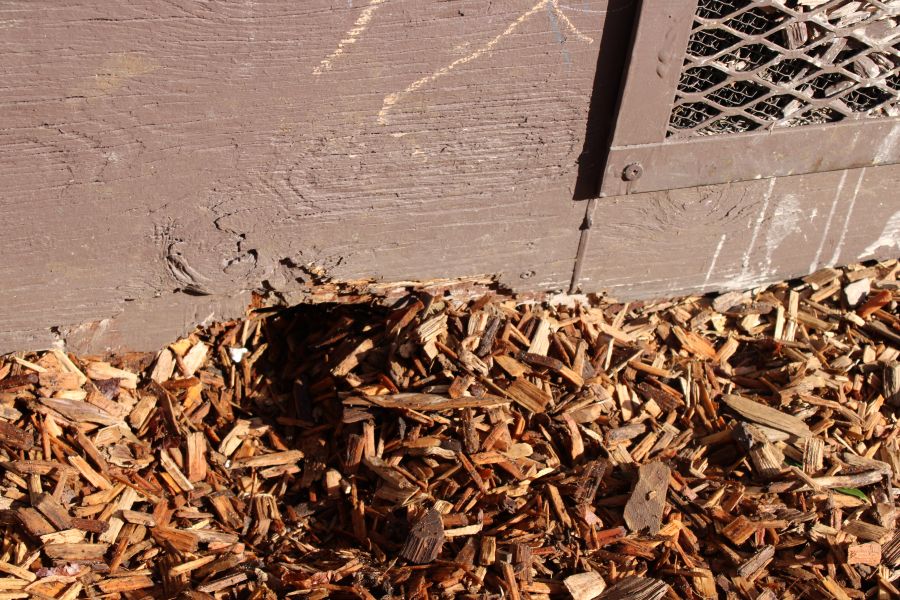
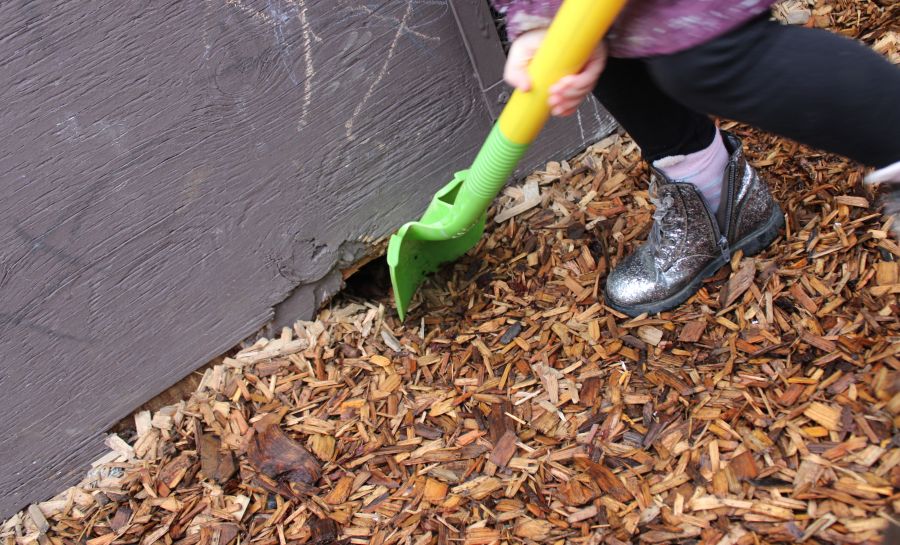
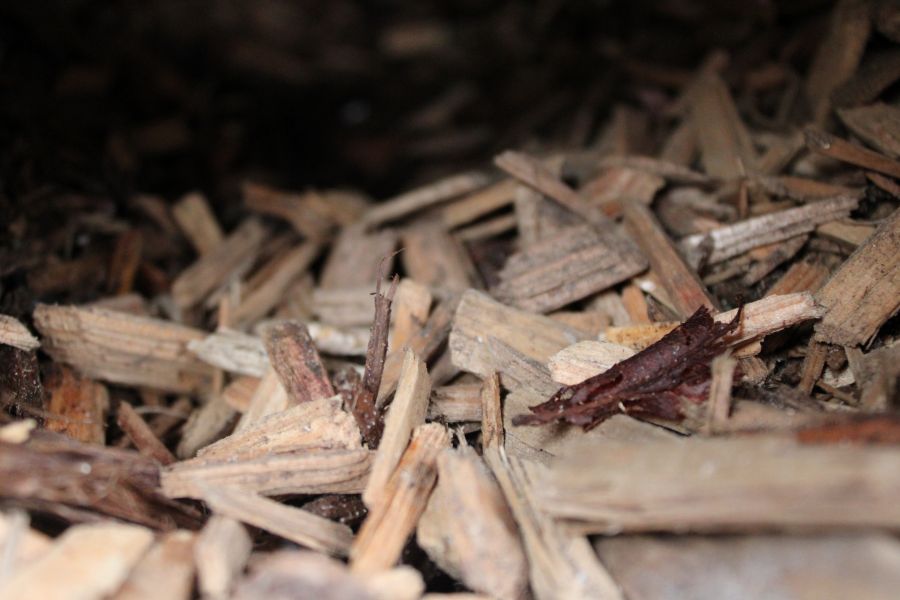
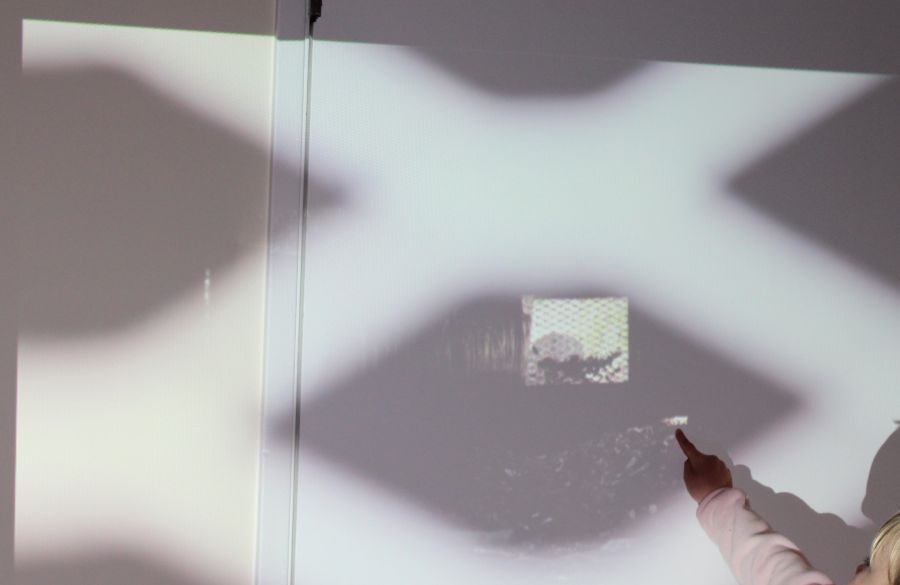
As questions about the mysterious beings underneath the centre continued to circulate, photographs became one of many ways we returned to the inquiry. Children took pictures of the darkness beneath the centre from different angles, bringing traces of the crawl space back into the classroom to revisit alongside conversations, drawings, and ongoing speculations about the zombies. These images did not offer answers, but became part of the collective work of staying with questions about what might be living underneath the centre.

Dust, Danger, and Zombies
Conversations about zombies seep into all parts of our days. A few children grind colourful sidewalk chalk against plastic cups, turning it into dust they call fairy dust and sprinkling it outside the metal grate. The fairy dust, they explain, protects them from zombies and keeps the mysterious beings underneath the centre from coming out.
 |
 |
Sophie: We sprinkle the fairy dust at the zombie house. Then the zombies eat it, and their heads explode.
Mateja: How do we know they ate it?
Sophie: We leave the dust and when we come back only a little is left.
We return to zombies in different ways. One of these returns takes shape through drawing. Sitting together with pencils and paper, children draw zombies through marks and lines that tell stories of danger, protection, and beings that need to die. Again and again, children insist that ZOMBIES ARE BAD AND NEED TO DIE. Their declarations gather alongside intense graphite marks that fill the pages of our sketchbook.
Mateja: Why do you want to poison the zombies?
Matilda: They are not nice.
Mateja: How do you know they are not nice?
Matilda: Because they cut curtains.
Alice: And they steal stuff.
Cleo: And they stuff underneath the lockers. Stuff that they steal.
Mateja: What kind of stuff? Can you give me an example?
Cleo: I don’t know. They stole all of my money.
As graphite gathers on the pages of our sketchbook, pencils begin to dull and require sharpening. Conversations gather around pencil dust as children insist that the shavings collected in the sharpeners can also protect us from zombies.. Bags of pencil shavings begin to accumulate as children sharpen pencils and pencil crayons, gathering dust they believe will keep the mysterious beings underneath the centre away. Fairy dust gives way to pencil dust, as another material becomes folded into the ongoing conversations, warnings, and protective practices that continue to shape our inquiries with zombies.
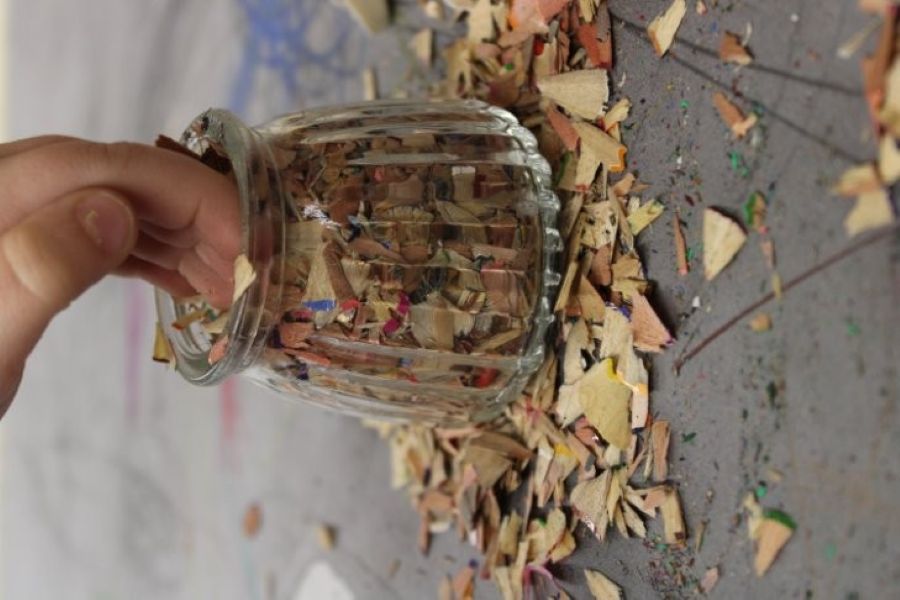


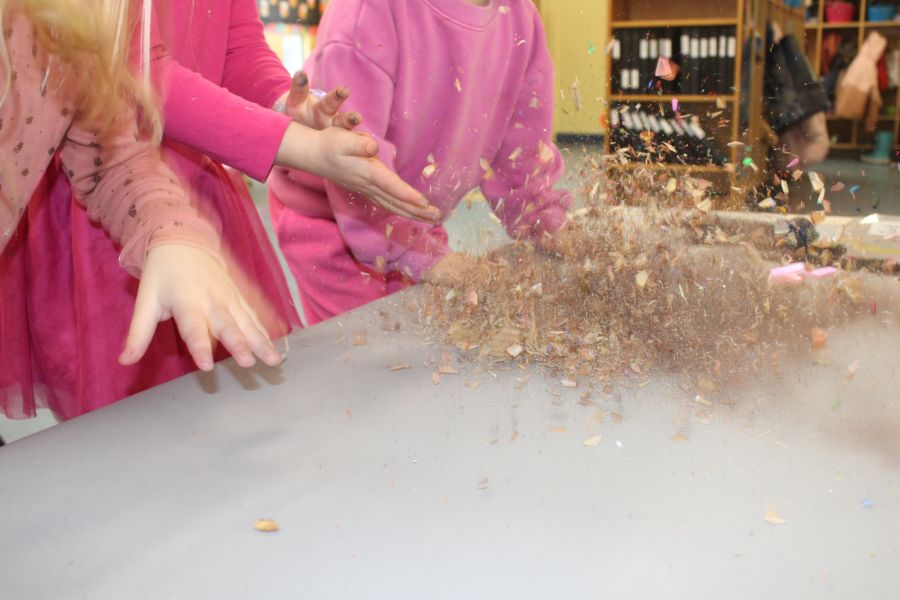
Freya: This makes the zombie die.
Mateja: Why do they need to die?
Freya: Because they are bad. They hit us in the face.
Mateja: When did this happen?
Freya: Ay nighttime. They snuck into your room.
Hannah: They hit us in your face and went back home and hit us again, again, again, and again.
Freya: We actually saw a real zombie.
Astrid: We are going to collect all that pencil dust and place it outside as a trap. The zombies like it and they will come out. Then we can catch them and lock them in a dumpster. The garbage people have a key. They will unlock it and take the zombies to the dump place.
Sophie: We need thousand bags of pencil dust so we can kill them so everyone can be safe.
Across these conversations, children create stories and practices intended to protect themselves from zombies. Pencil dust becomes part of these protective efforts, gathered in large quantities and imagined as both lure and trap. Yet, even as zombies are positioned as dangerous beings, children continue returning to them—drawing them, warning one another about them, and imagining what life underneath the centre might be like. The inquiry remains open, refusing singular explanations and inviting other possibilities to emerge.
Getting to know the zombies
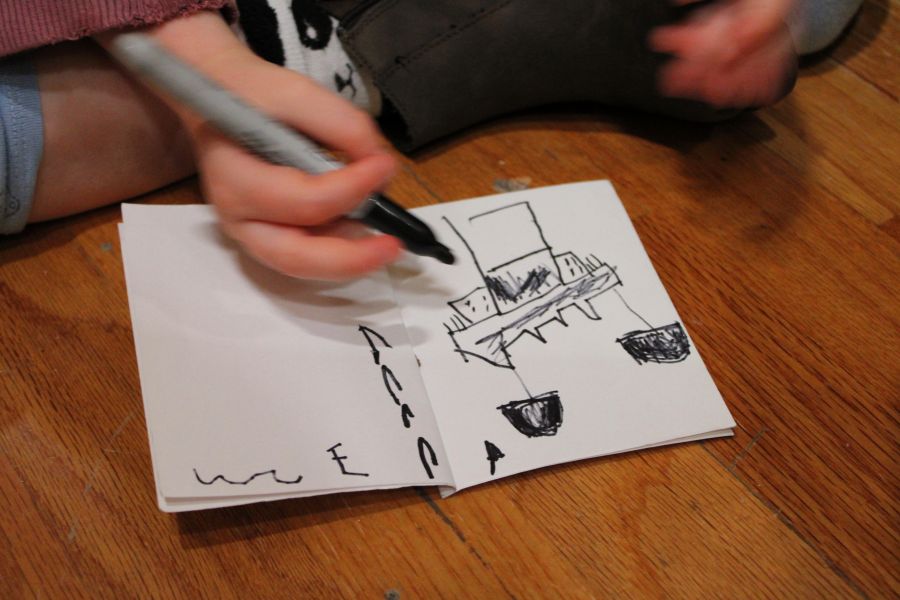
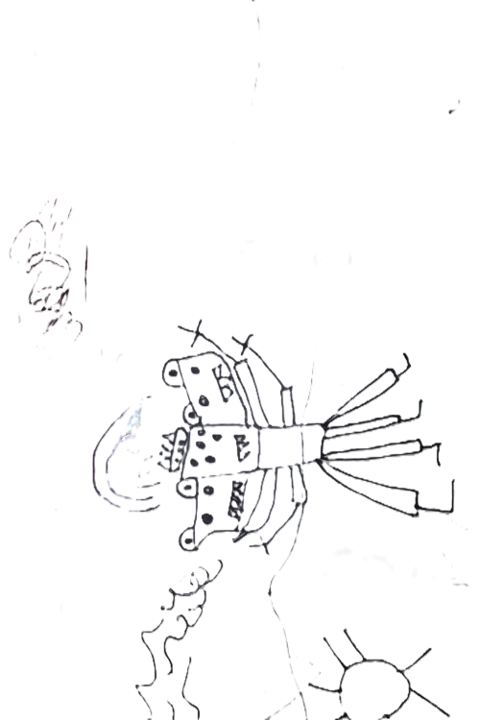
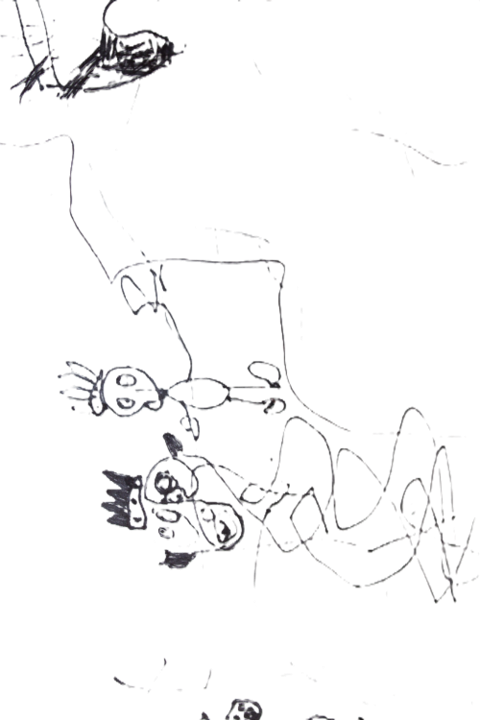
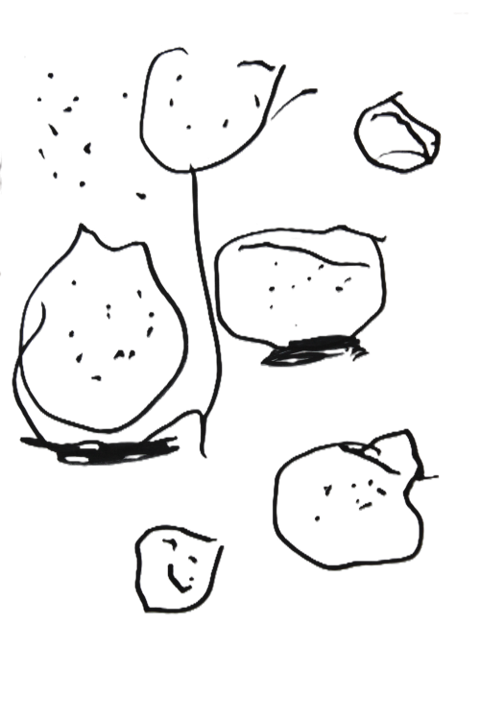
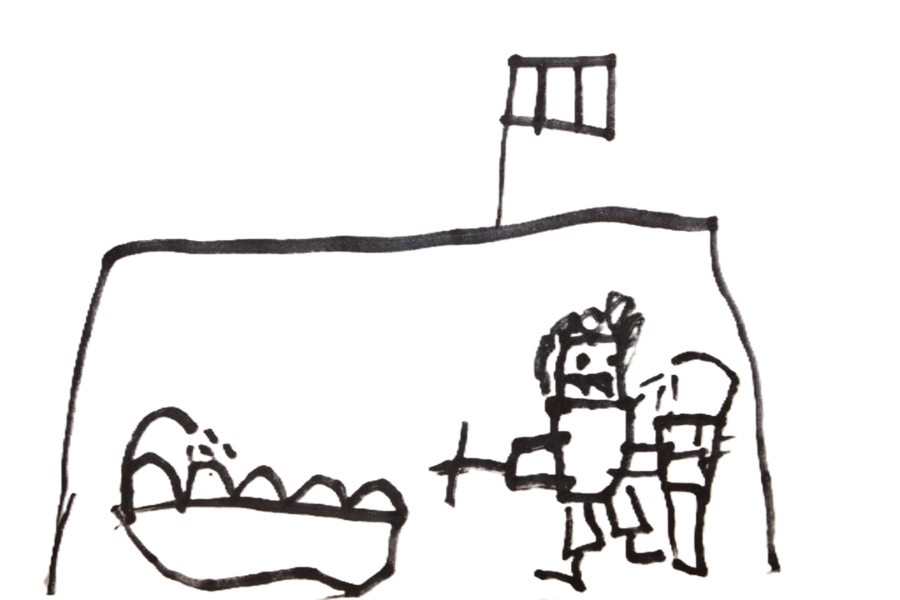
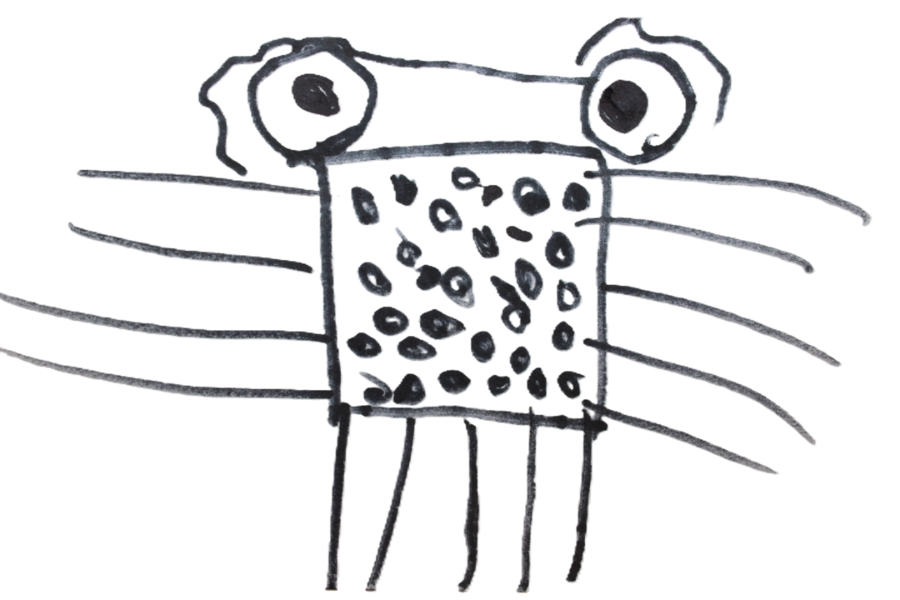
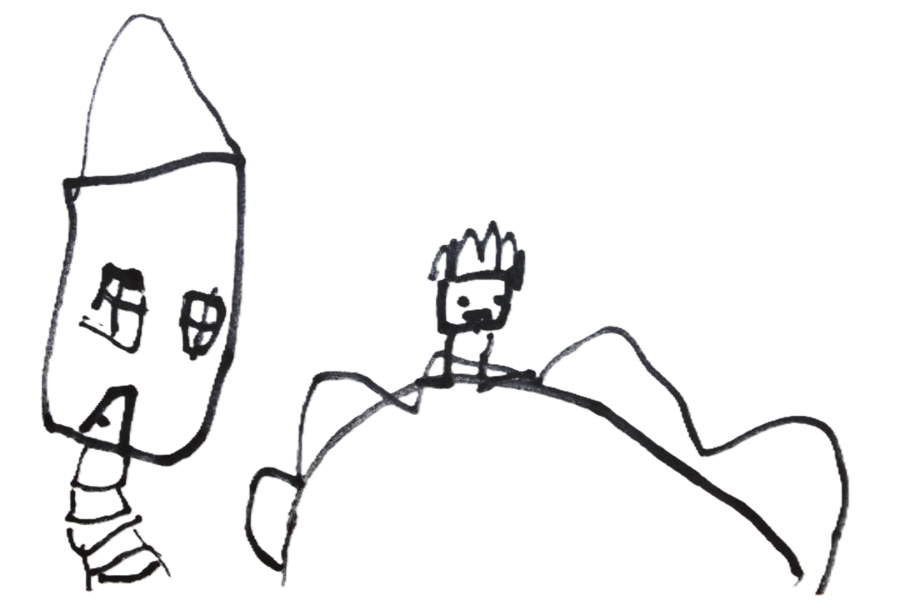
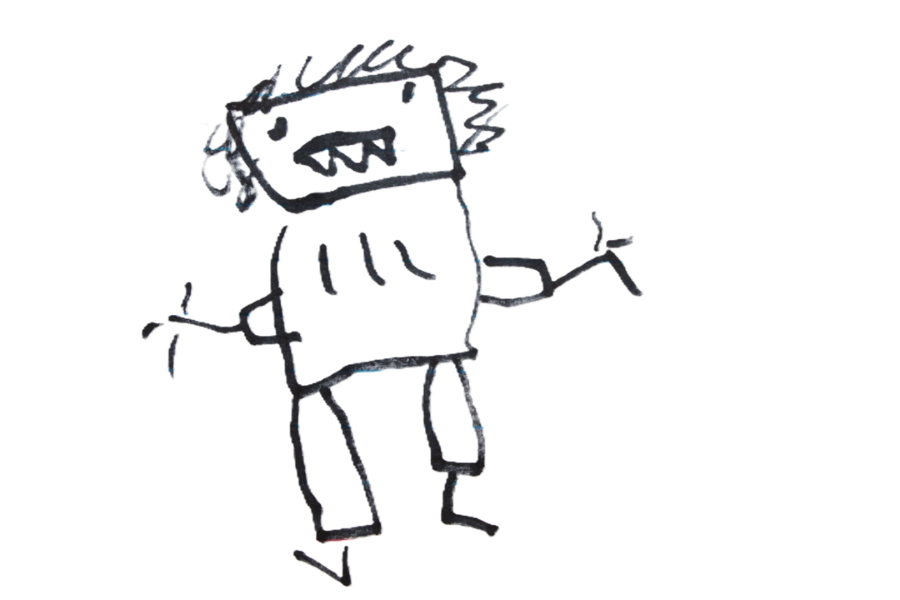
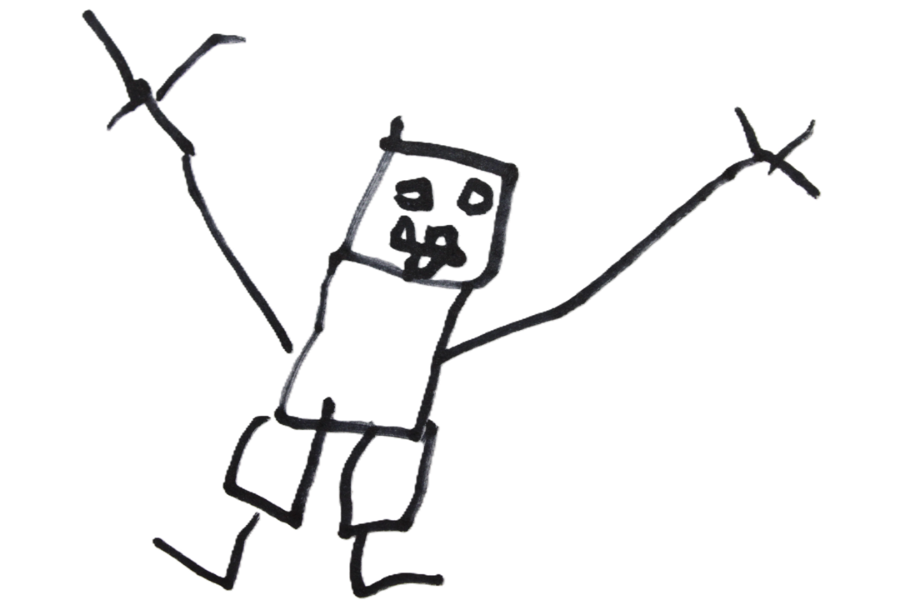
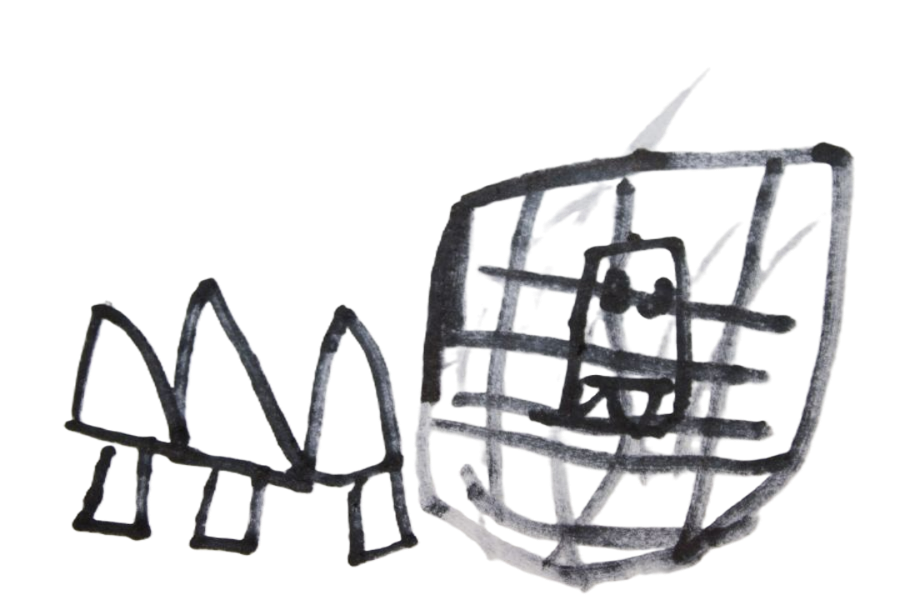
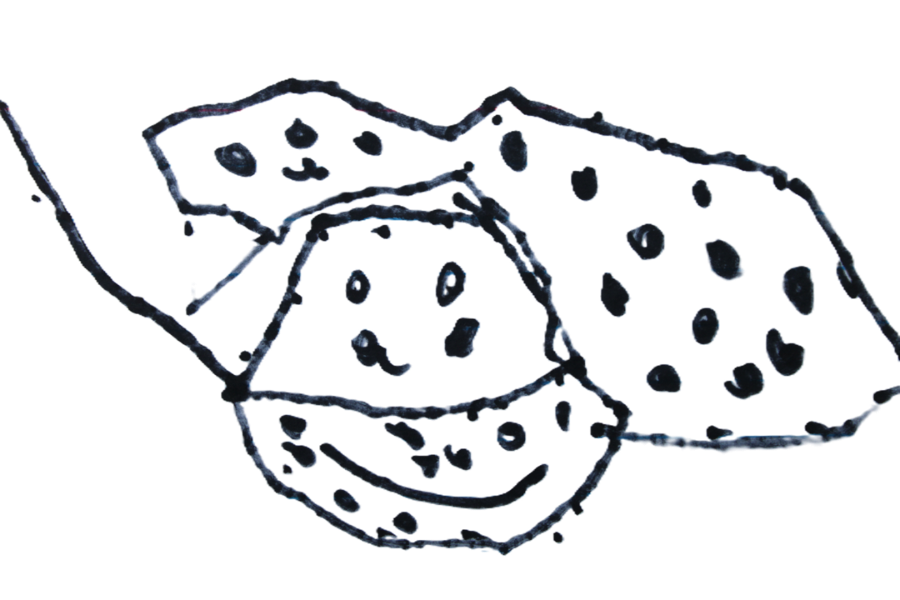
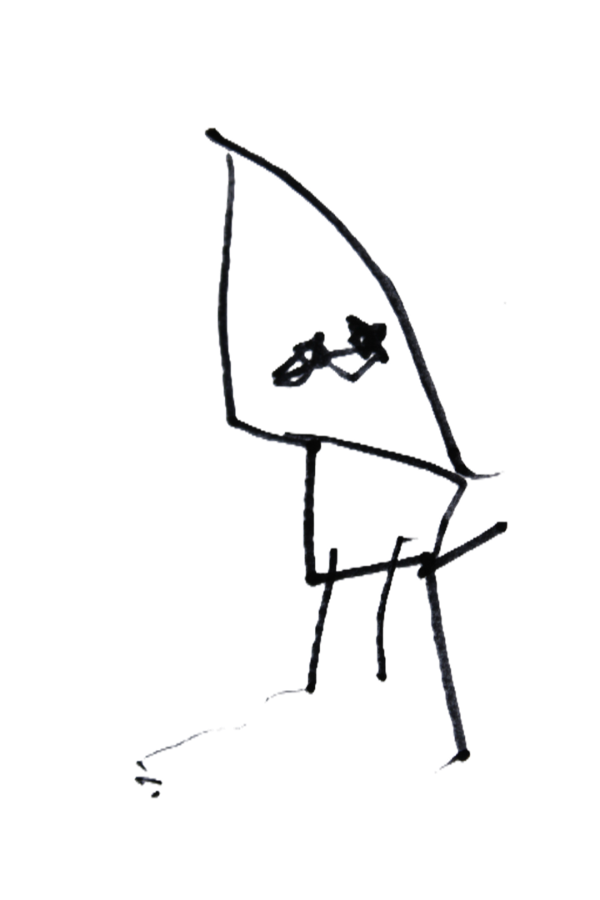
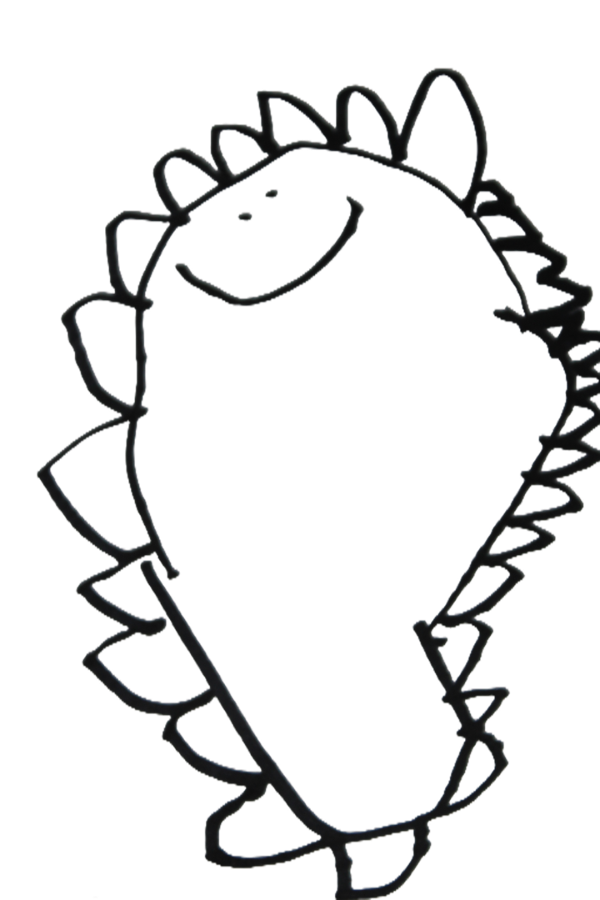
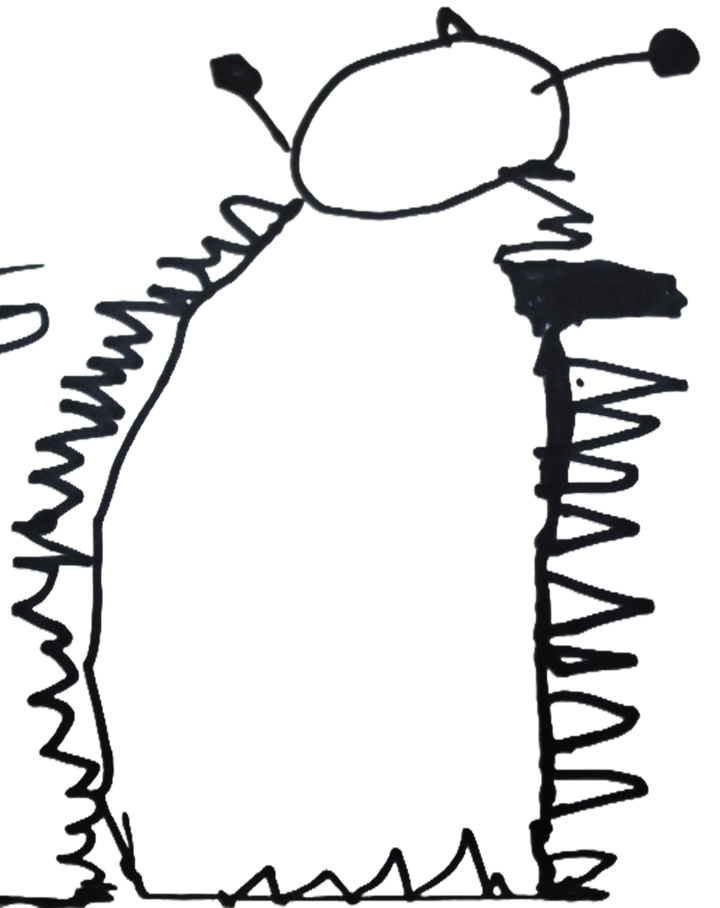
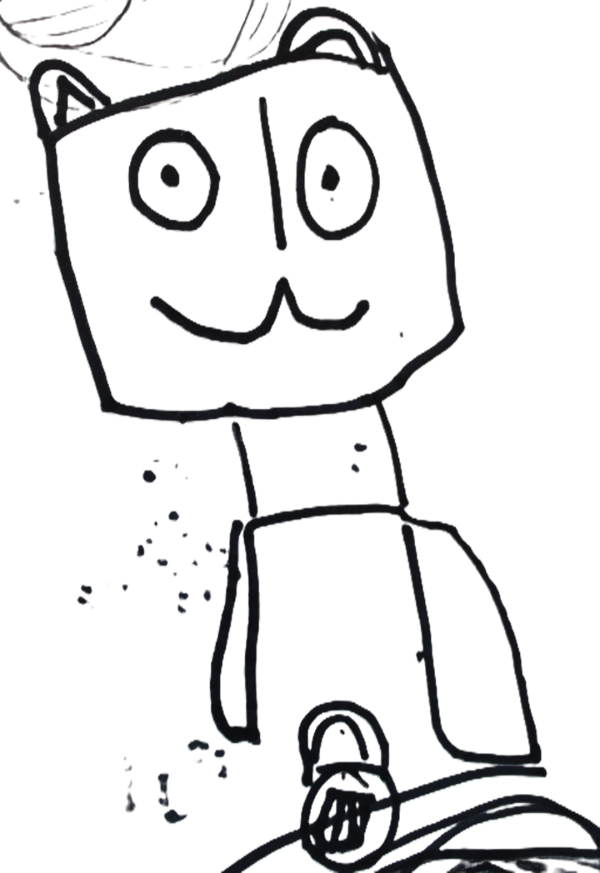
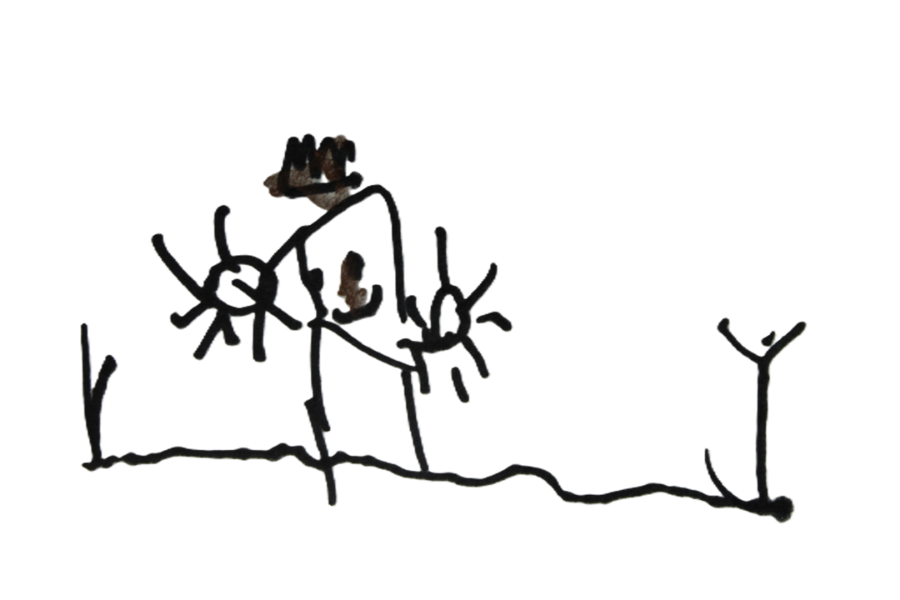
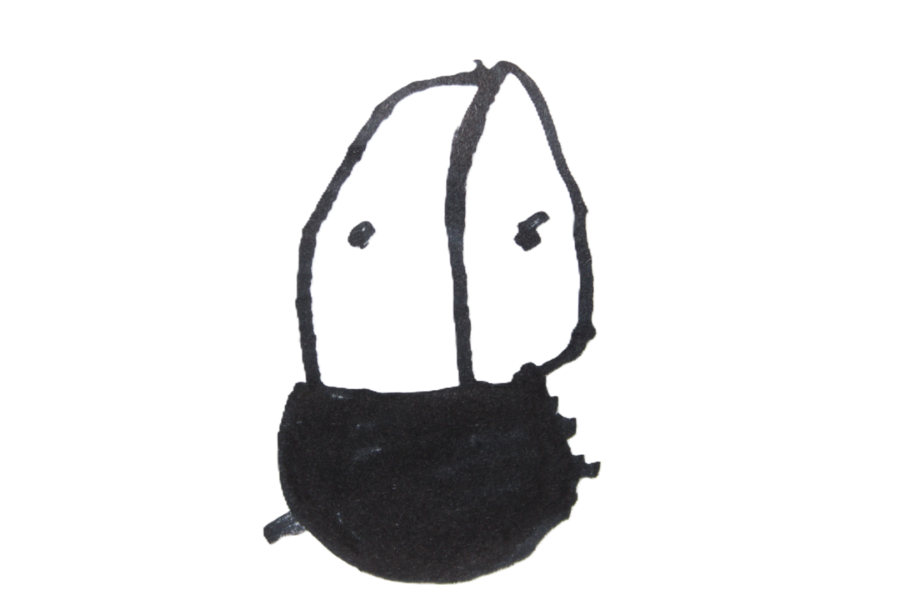
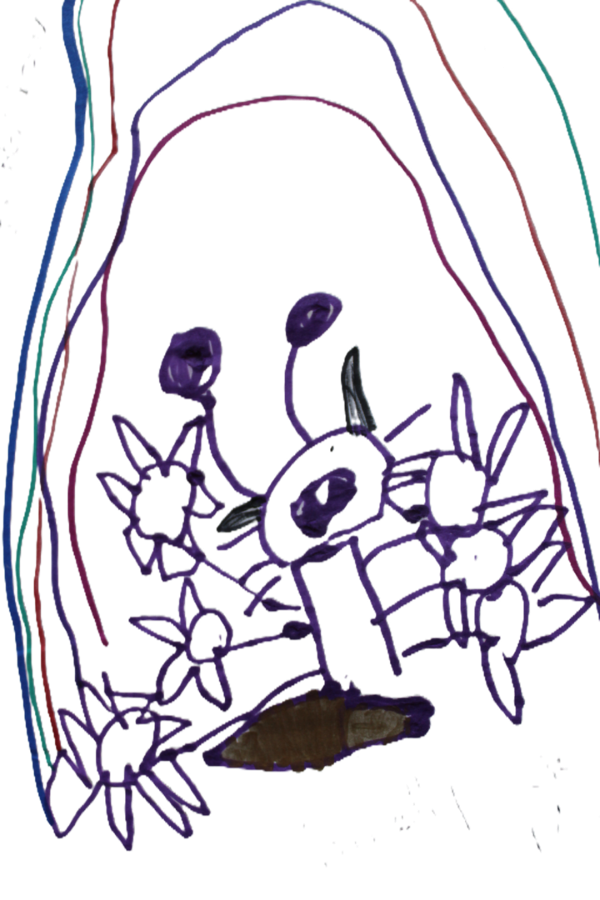
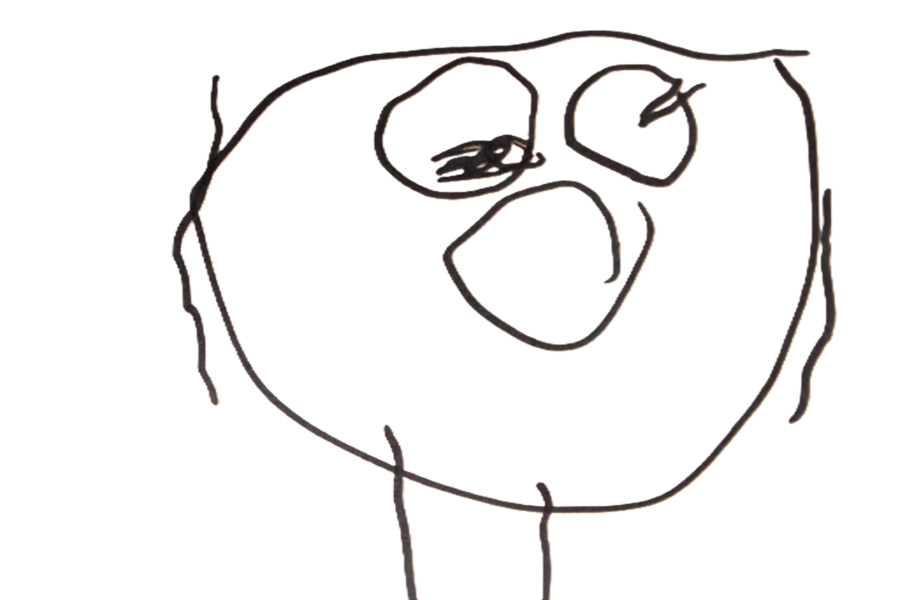
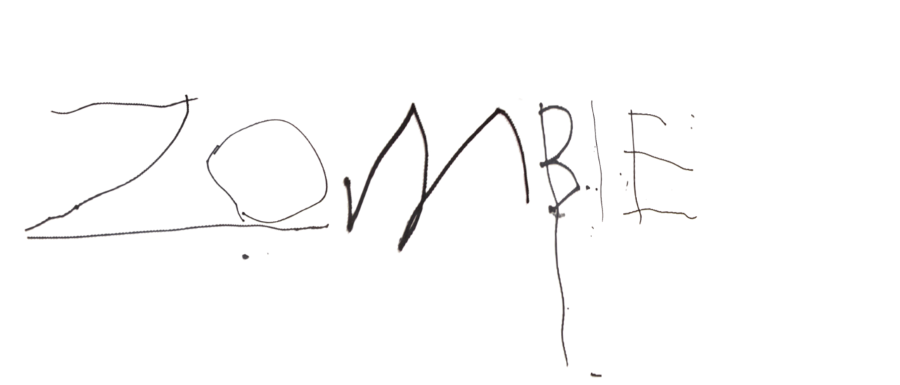
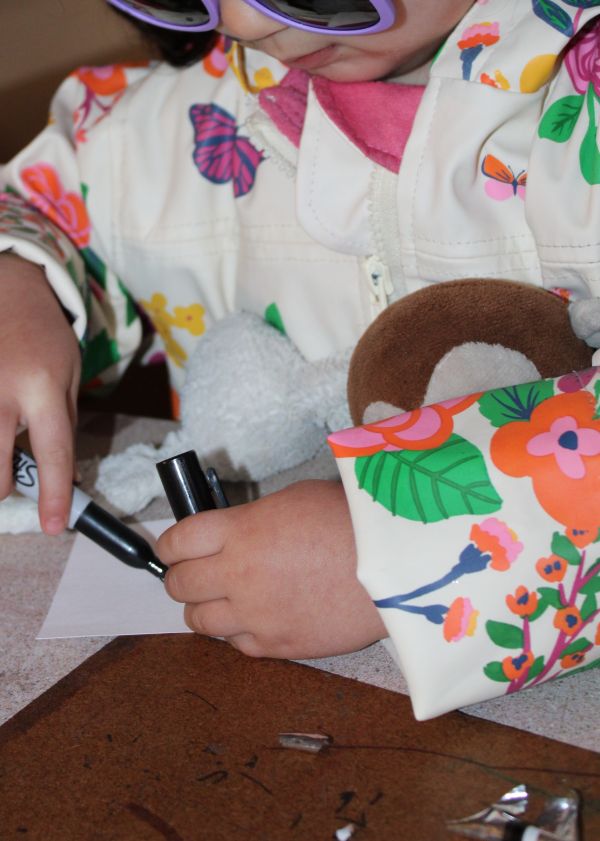
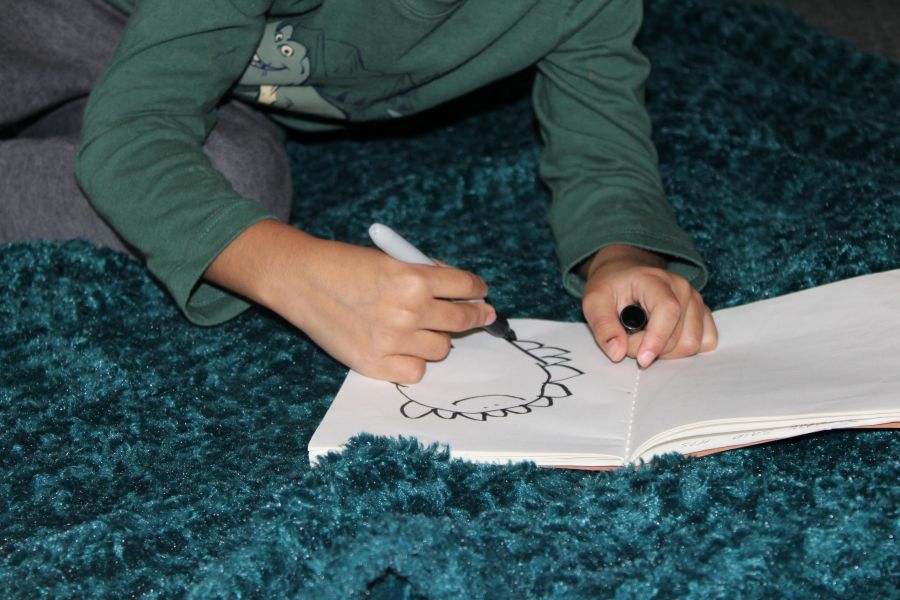
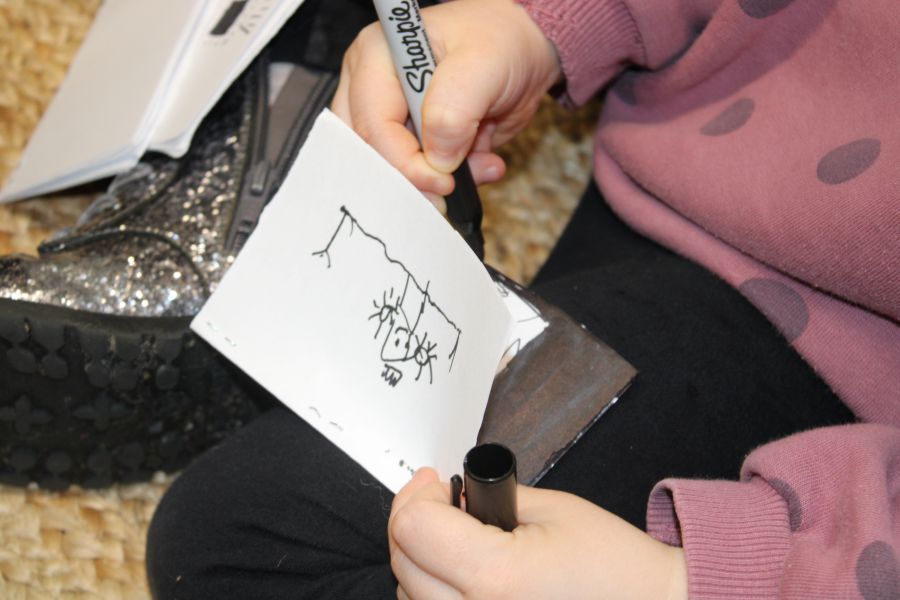
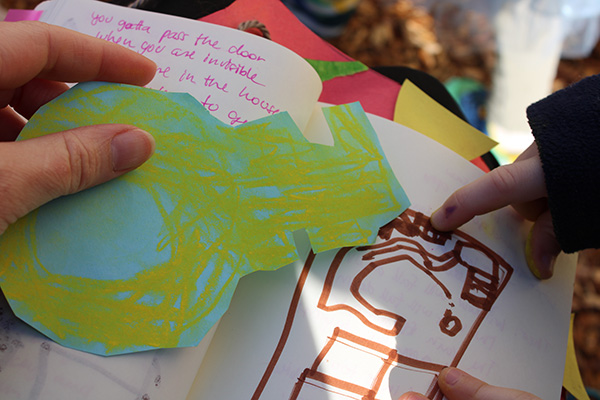
Children repeatedly position zombies as dangerous beings who must be trapped, killed, or removed. Yet, as we continue returning to zombies, other questions begin to linger. What does it mean to share this particular space? Who lives underneath the centre, and how do children imagine their lives? Returning invites attention to how relations, materials, and conditions shift over time. Sharpies, with their fine-line markings, open new possibilities for noticing and storytelling. Children draw not only zombies, but also their homes, their eggs, their pets, their cameras, and the worlds they imagine beneath the metal grate. Returning to zombies creates space for children to stay with ideas long enough for other possibilities to emerge, refusing singular interpretations and opening space for more complex relations with the mysterious beings underneath the centre.

|
|
|
|
|
Matilda: I found some screws underneath the stairs (at my house), and I don’t remember them being there. Zombies make eggs underneath the house and take it underneath the blue house to hatch. This is where they lay eggs, and they are connected to some zombies like climbers. The climber gives more strength and because they like it. The climber is in the middle to connect the house to where they lay eggs. They are like chickens and eggs are like roosters. They sit on the eggs, and they go cock-a-doodle-doo.
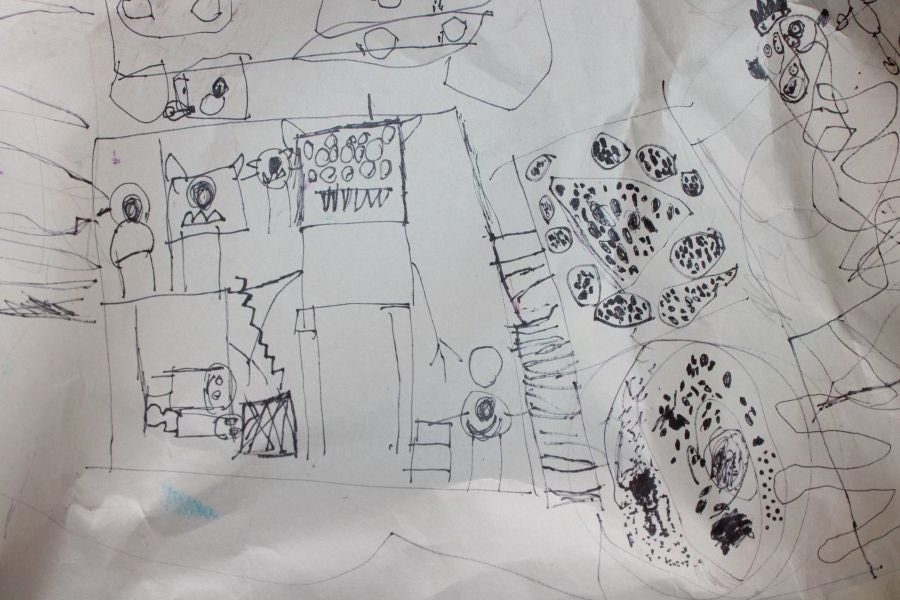
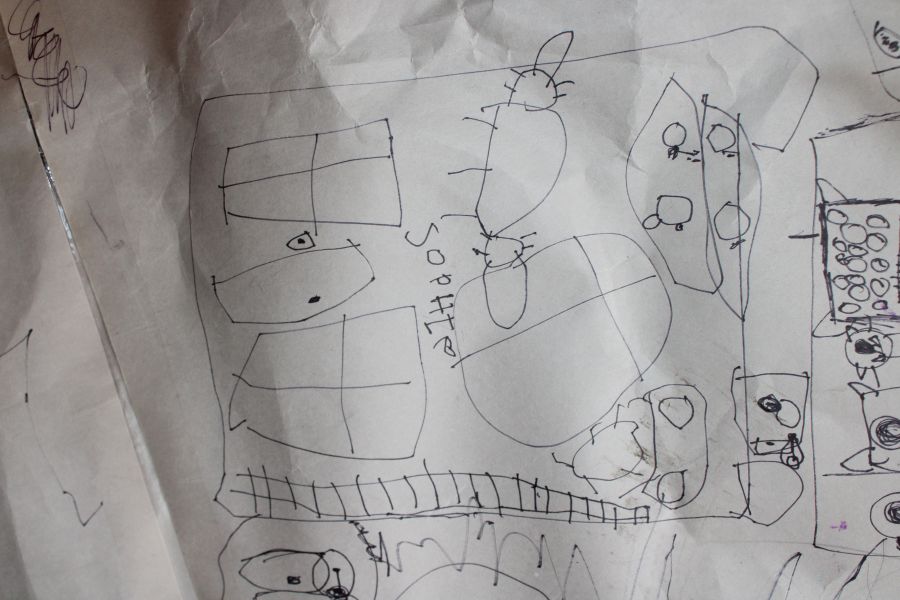
Sophie: That’s the zombie gate. That’s the door above the bathroom. That’s the lid. That’s how many eyes they have. This is a table and a bunk bed. That’s the staircase how to get down to there’s a doorbell. This is their cage. That’s just the side. This is the door and the keys. Two zombies are looking at the kids playing and when the kids aren’t playing then they come out. Zombies have cameras at the daycare. They watch us but can’t hear us. They only have a seeing mode, but not the hearing mode.
 |
 |
Emerson: I have a zombie pet at home. Zombies can also be pets. I saw scratches on the woodchips because the zombie scarches it at night.
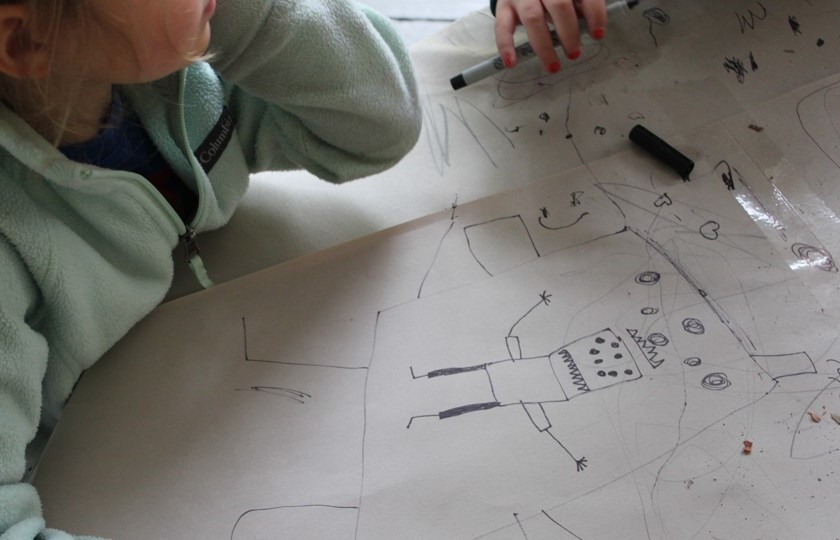
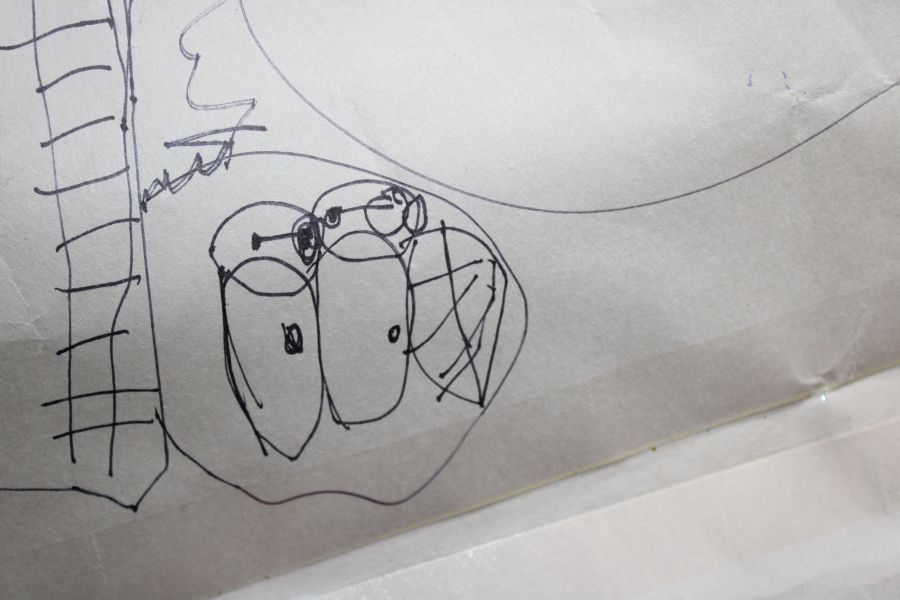
Across these drawings, zombies take on increasingly detailed and varied forms. Their homes begin to resemble familiar domestic spaces, complete with bunk beds, staircases, cages, tables, and gathering places. Some zombies lay eggs, keep pets, watch children through cameras, or adopt animal-like characteristics. These drawings do not erase earlier stories of danger, but they invite other details and possibilities to emerge, expanding the ways children imagine life underneath the centre.
In Communication
After many months of returning to zombies through conversations, drawings, warnings, and protective practices, an educator invites children to write letters to the mysterious beings underneath the centre. The invitation opens another way of communicating with zombies, whose presence continues to provoke fear, curiosity, speculation, and ongoing negotiation. Sitting together at the table with index cards in hand, children make wavy and letter-shaped marks across the paper. Some ask the educator to write their messages on the back of the cards as they dictate what they want to say to the zombies.
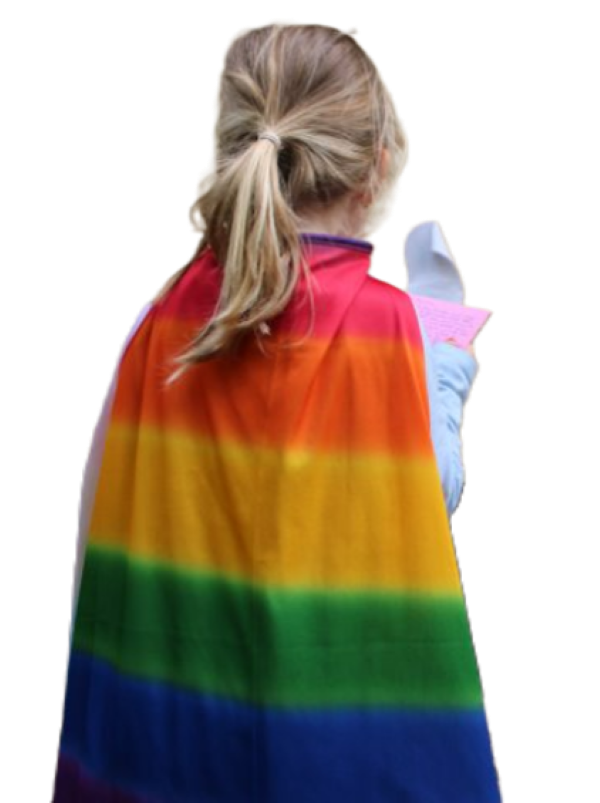
On another day, we gather outside in front of the metal grate sitting on a tree log to write another letter for the zombies. Ellie takes a deep breath and starts composing her message. As she dictates her words, she is careful to include her chosen signature: “Dear Ellie and everyone else.”:
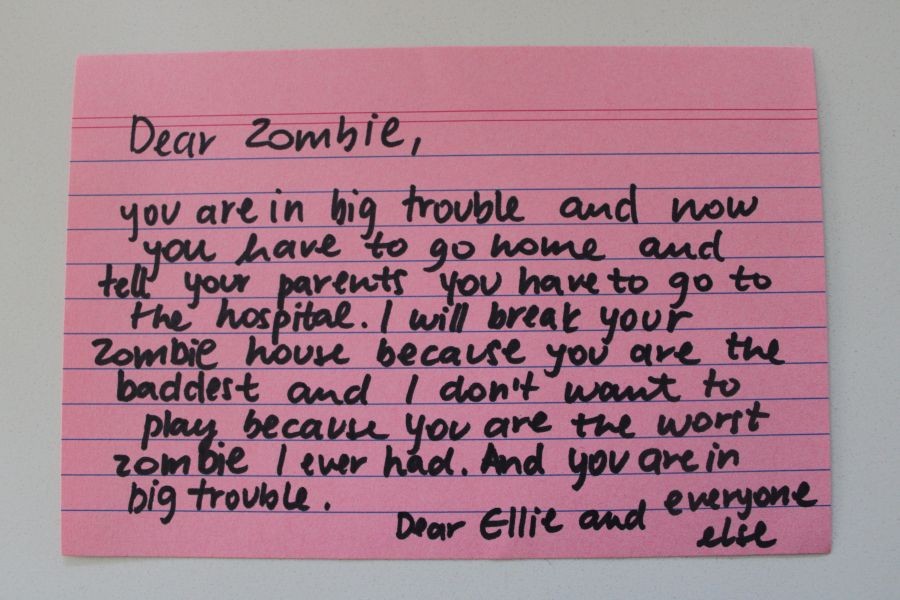
Dear zombie,
you are in big trouble and now you have to go home and tell your parents you have to go to the hospital. I will break your zombie house because you are the baddest and I don’t want to play because you are the worst zombie I ever had. And you are in big trouble.
Dear Ellie and everyone else
 |
|
 |
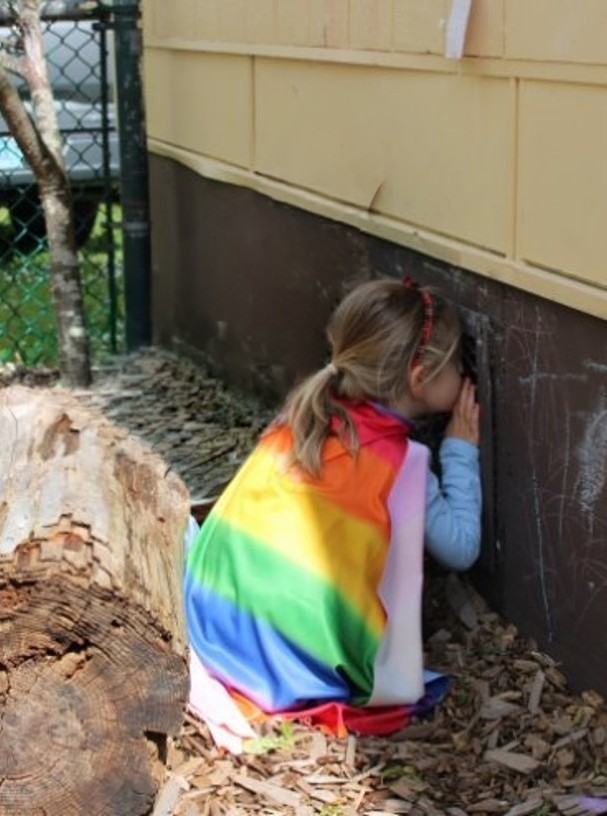 |
She asks me to write it down for her. Eager to get her message to the zombies, she speaks quickly, repeating parts of it several times as we work together to record her words. She then picks up the index card, stands facing the metal grate, and delivers the message once more, reading directly from the letter.
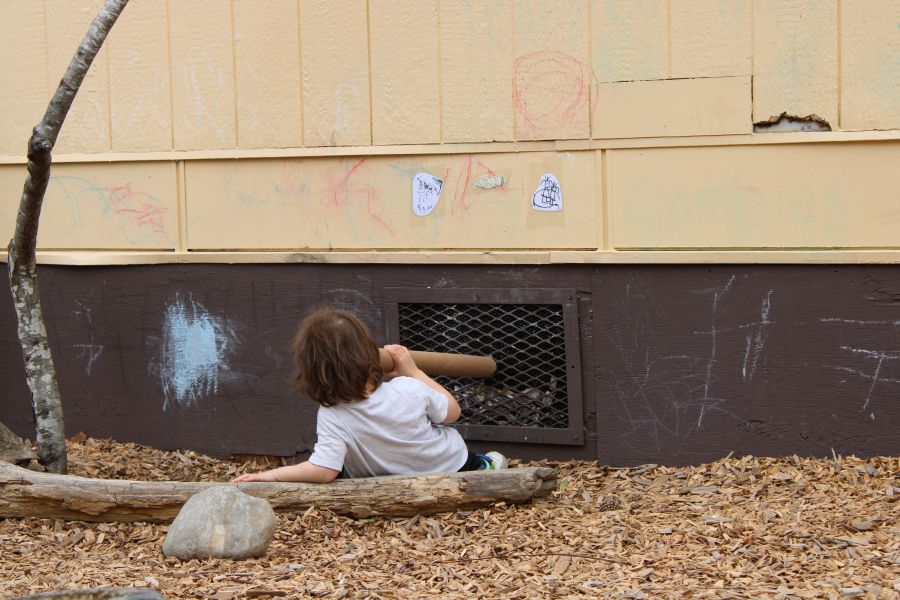
A few other children join us outside with their letters, and they collectively decide to place them into the narrow hole between the centre’s building and the woodchips. They refer to the opening as a zombie mailbox. What was once a small gap alongside the building becomes a place for sending messages to the mysterious beings underneath the centre.
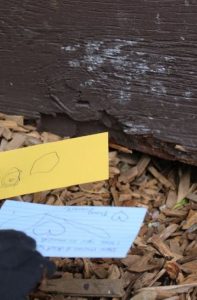
During my visit the following week, Hannah grabs my hand and marches towards the metal grate, pulling me behind her. Without hesitation, she lowers her body onto the woodchips and peers into the opening where she had left her letter. The letter is gone. Hannah jumps up and exclaims that it has disappeared.

Questions about whether zombies live underneath the centre continue to circulate among the children.
Hannah: I think the zombies are real because I put the letter in real zombie home and then it disappeared. The zombie got it. I actually put the note in the cave.
For Hannah, the disappearance of the letter becomes evidence that zombies are real. Other children begin sharing stories of hearing, seeing, and encountering zombies in different places. The sounds and movements once associated with the crawl space beneath the centre extend beyond the metal grate, travelling onto the outdoor deck and into children’s homes.
Logan: I see a whole body and it’s ready to come out. The zombie is sneezing. They are nocturnal, that means they sleep during the day. That’s the noise of the zombie. I think it says, “I need space, I want to come out.” They are watching us right now.
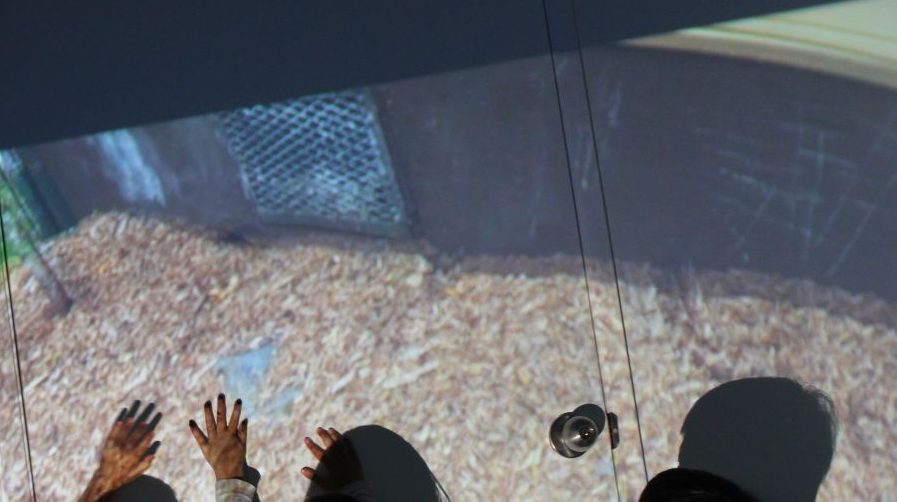
Goldie: I heard it roar all day long at nighttime. I heard it from upstairs at my house. On top of my house. I went downstairs. Zombies were at my house eating the food. Zombies at my house were eating all the chicken and rotten apples and all the rotten stuff in the garbage can. The zombies went to get all the fruits and apples.
Logan: My stuffy pup heard a zombie. He heard a zombie roar. When he was sleeping, he heard the zombie roar. He was sleeping on the couch. The real dog heard the zombie, and she barked and that woke me up and my mommy and mamma.
Conversations about whether zombies exist continue to circulate among the children. While some remain unconvinced, Hannah repeatedly returns to the disappearing letter as evidence that zombies are real.
Kim: Can we use this long, thin paper tube to look at the zombie cave? I think we can see something deep in that dark cave.
Kian: It’s too small. I don’t see anything. We need a bigger one.
Kim: Maybe the zombies don’t want us to bother them. Should we talk to them nicely and tell them we really want to see their real lives in that dark cave?
Hannah: They are sleeping in the daytime. I know … we can give them walkie-talkie so we can talk to them. But we have to give them one hundred because we need one hundred walkie-talkies for children and teachers.
Kim: Zombies know how to use walkie-talkie?
Hannah: Yes.
Kim: Are you sure?
Hannah: Yes, I taught them.
Kim: When? You said they are sleeping at daytime.
Hannah: I came and taught them at night.
Kian: Zombies are not real!
Hannah: They are! Because I left a note for them and it disappeared.
Kim: What was in the note?
Hannah: I invited them to my birthday party.
Kim: Did they come?
Hannah: Yes, they did.
At the Threshold
As children continue drawing zombie homes, new questions begin to emerge about life underneath the centre. Bathrooms, bunk beds, staircases, gathering places, and other familiar features appear in their drawings, suggesting that zombies inhabit worlds that are both strange and recognizable. These conversations extend beyond questions of whether zombies exist, inviting ongoing negotiations about who lives in this place, who belongs here, and what it might mean to share space with beings whose lives remain largely unknown.
For some children, imagining zombie homes on paper is not enough. Soon, maps are drawn, routes are planned, and holes are investigated.
As conversations about zombies continue, children begin imagining ways of entering the zombie home themselves. Maps are drawn, routes are planned, holes are investigated, and possibilities for moving between the daycare and the world underneath the centre are carefully debated. Questions about whether zombies exist become entangled with questions of access, escape, and how one might travel into the mysterious space beneath the metal grate.
Ferdinand: We start at the steps and then go down the steps and around the monkey bars and then up the rock wall and then down the slide. Then around the climber over here and straight here.
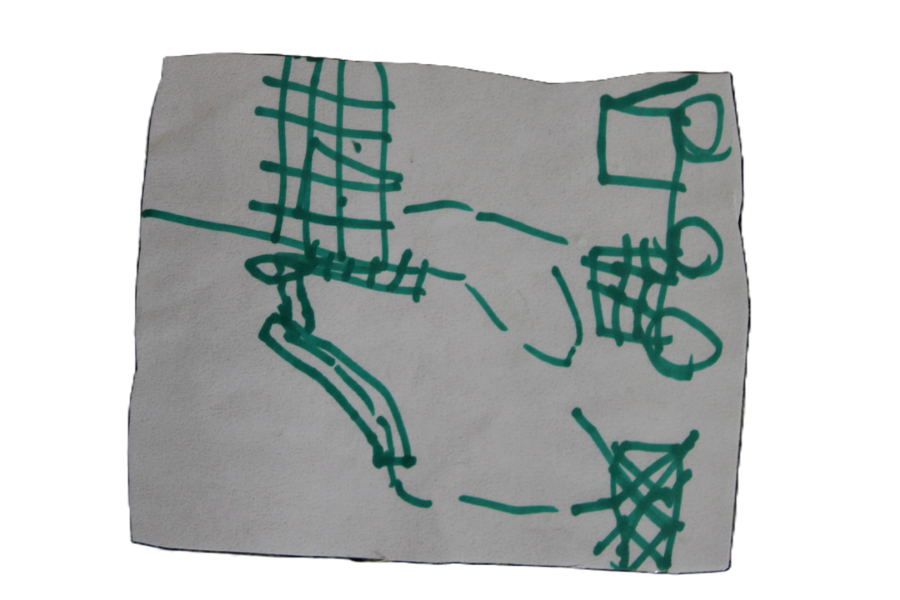
River: One time I almost went in and I made it half-way in because my head was big enough and didn’t fit in.
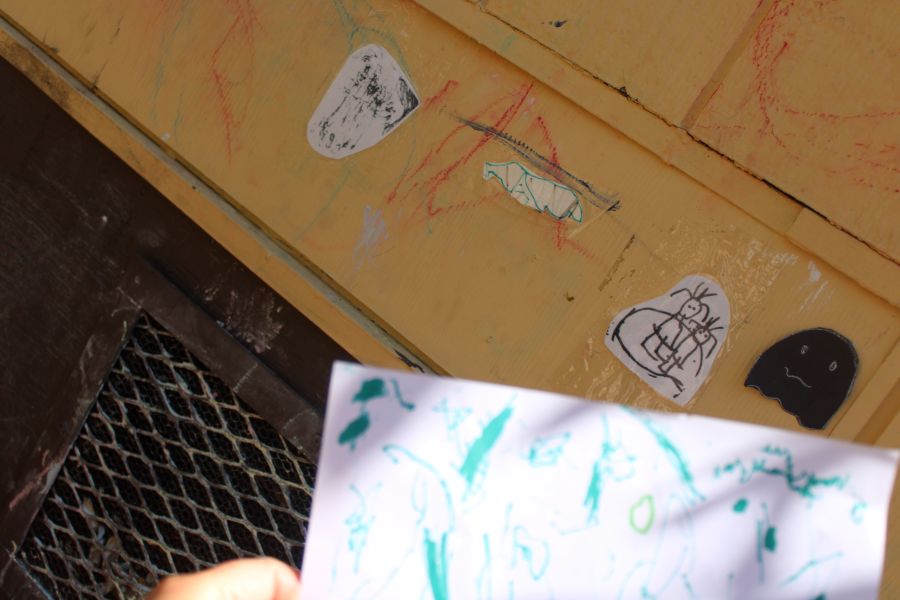
River: The more we dig, the more we have to dig at. Emma* could sink in. She is small enough.
Ferdinand: What should I do with the hole?
Maren: Can you help us? We are trying to get the zombies out.
River: I want to show you the dry sand under there trying to get out. We need a plan; maybe a crane.
After many months of gathering outside the metal grate, facing the same cream and brown coloured wall of the centre, Logan notices something hiding behind the tiny bamboo plant just slightly right of the zombie house.
Logan: I found a lock.
Jennifer: Why do you think there’s a lock there?
Logan: Zombie is inside here. Who got the lock for this, teacher?
Kai and Logan: Zombie, do you have the key?!
Logan: We need the key to let you escape. Please give us the key zombie.
Jennifer: Do you think the zombie will give you the key?
Logan: Yes, they will because they’re are feeling sick and they need to go to the doctor.
River: Is there anyone who has the key in here?
Jennifer: Why do you want the key?
River: So that the zombies can escape.
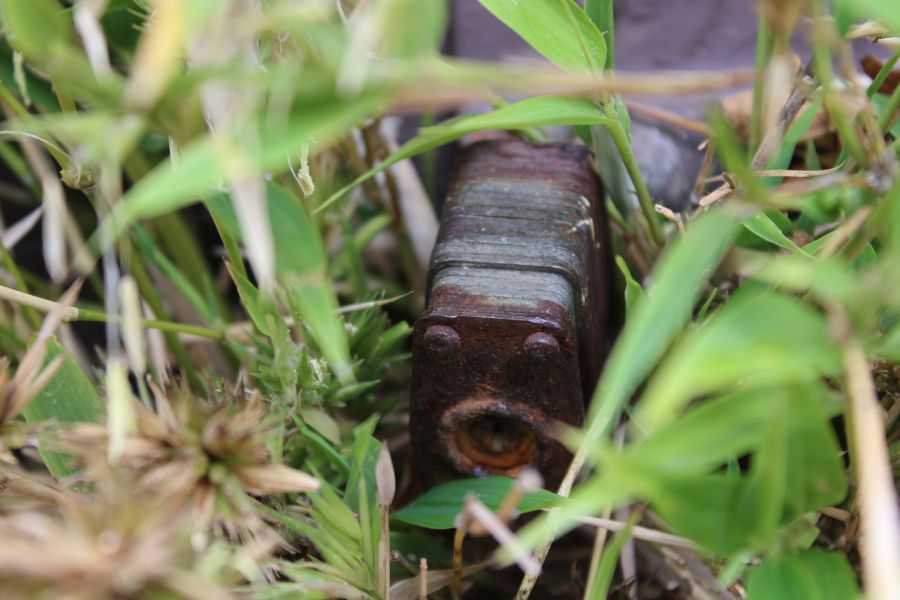
River: We can use a saw to break the lock and get it.
Logan: That’s a great idea. River has a plan. We need a saw to get in.
River: The window will fall down. The roof will fall down. The rain is going to be all over the daycare. We can’t get in, it’s too dangerous and the zombie is alreday dead.
Leonard: The zombies are already dead.
Ferdinand: Oh, we don’t need the key because the hole is already open. My map was correct.
River: No, my map was correct!
Ferdinand: Maybe this key will work.
River: No, we need a saw!
The children start calling:
Anybody home?!? Anybody home?!? Anybody home?!? Anybody home?!? Anybody home?!?
Across these conversations, children continue to negotiate what kinds of relations are possible with zombies. While questions of danger remain present, new concerns emerge about access, care, escape, and what responsibilities might accompany living alongside the mysterious beings underneath the centre.

Our commitment to staying in conversation with zombies is not driven by a desire to determine whether they truly exist or to resolve the questions they raise. Instead, these conversations invite children, educators, and pedagogists to remain with uncertainty, to revisit ideas from new angles, and to negotiate what it might mean to share space with beings whose lives remain largely unknown. Across drawings, letters, maps, escape plans, and countless conversations, zombies continue to provoke questions about belonging, coexistence, danger, care, and the possibilities of living alongside others.
The zombies underneath the centre remain unresolved. Yet, perhaps this is what continues to matter. By returning to the mysterious beings beneath the metal grate, children create space for multiple stories, shifting relations, and possibilities that exceed singular explanations. In doing so, they remind us that living together often requires remaining open to what cannot be fully known
* Some children’s names are pseudonyms